The bicycle commute has always been shaped by weather. Rain means fenders and waterproof layers. Cold mornings require gloves. Strong winds turn familiar streets into harder rides. But in 2026, extreme heat is becoming a more important part of the urban cycling conversation. It is affecting when people ride, which streets they choose, how bike-share systems are used, and what cities may need to build if cycling is going to remain dependable during hotter summers.
Recent research is beginning to show just how sensitive urban cycling can be to environmental conditions. A 2026 study examining bike-share systems in major U.S. cities found that ridership generally peaked around comfortable temperatures of 20 to 25°C, or roughly 68 to 77°F. Rain consistently reduced cycling activity, while visible environmental hazards such as wildfire smoke could trigger sharper behavioral responses than pollutants riders could not easily see or smell.
The story is not simply that hot weather makes cycling uncomfortable. Heat changes the geography of the commute. Shade matters more. Waterfront routes can become more attractive. Green streets may feel significantly different from exposed corridors surrounded by asphalt and concrete. The shortest route on a map may no longer be the route a commuter actually wants to ride.
That makes extreme weather both a personal commuting issue and an urban design issue. Riders can adapt their schedules, equipment, pace, and routes, but cities also have an opportunity to make cycling networks more resilient through shade, trees, connected infrastructure, water access, and safer alternatives when conditions become difficult.
Why Heat Is Becoming Part of Everyday Cycling Decisions
Most bicycle commuting happens outdoors with almost no protection from the surrounding environment. Riders feel sunlight, pavement heat, humidity, wind, rain, and air quality directly. Unlike someone traveling in an air-conditioned car or enclosed train, a cyclist also produces additional body heat through physical effort.
That does not mean cycling becomes impractical whenever temperatures rise. It does mean riders have to pay closer attention to conditions that might once have been treated as background information.
Weather Is Changing When and Where People Ride
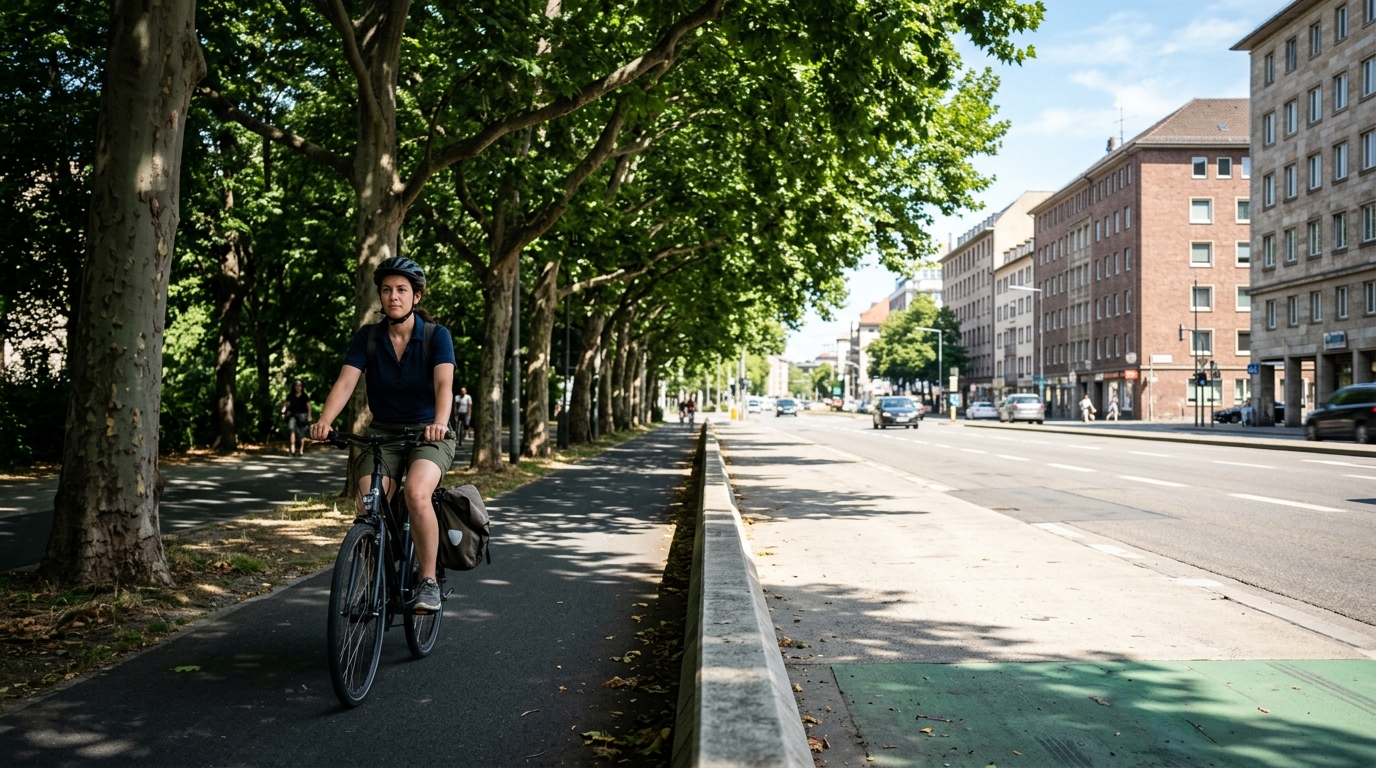
Research published in the Journal of Environmental Management in 2026 examined bike-share activity across five major U.S. cities and found clear relationships between cycling and weather. Comfortable temperatures supported ridership, while precipitation consistently discouraged trips. Researchers also found evidence that during extreme heat, activity could shift geographically toward areas such as waterfronts that offered a more favorable local environment.
This matters for commuters because a normal route is not necessarily equally comfortable throughout the day. A street that feels pleasant at 7:00 a.m. can become exposed and punishing in late afternoon. Buildings may shade one side of a corridor in the morning and leave it completely exposed later.
Hotter days can shift the timing of the commute
One of the easiest adaptations is also one of the most powerful: changing when the ride happens. Earlier mornings often provide cooler pavement, lower direct solar exposure, and less accumulated urban heat. Evening conditions may also become more comfortable after the strongest part of the afternoon heat has passed.
For workers with flexible schedules, even moving a commute by an hour can change the experience considerably. Riders who do not control their work hours have fewer options, which makes infrastructure increasingly important.
The U.S. Centers for Disease Control and Prevention recommends limiting strenuous outdoor activity during the hottest part of the day when possible, pacing activity, drinking water regularly, and paying attention to symptoms of heat-related illness. The CDC’s current heat and health guidance also recommends checking local HeatRisk and air-quality information before spending extended periods outside.
For cycling specifically, pacing matters. An e-bike can reduce physical effort during hot conditions, which is one reason electric bicycles are becoming increasingly relevant to daily transportation. Our guide to e-bike commuting in 2026 looks at how electric assistance, battery safety, and everyday urban riding are changing the commute.
Rain, smoke and humidity complicate the decision
Heat rarely exists in isolation. Humidity can make a moderate temperature feel more demanding because sweat does not evaporate as efficiently. Summer storms can arrive quickly. Wildfire smoke may create poor visibility and uncomfortable breathing conditions even when the temperature itself seems manageable.
The 2026 U.S. bike-share study found that visible wildfire smoke produced noticeable drops in cycling activity in San Francisco. That is useful because commuters often make decisions based on what they can immediately experience: the sky looks hazy, the air smells smoky, or breathing feels uncomfortable.
Air quality therefore deserves a place beside temperature and rain in morning trip planning. Riders should consider current local guidance rather than assuming that a clear route automatically means suitable riding conditions.
Shade and Greenery Are Becoming Cycling Infrastructure
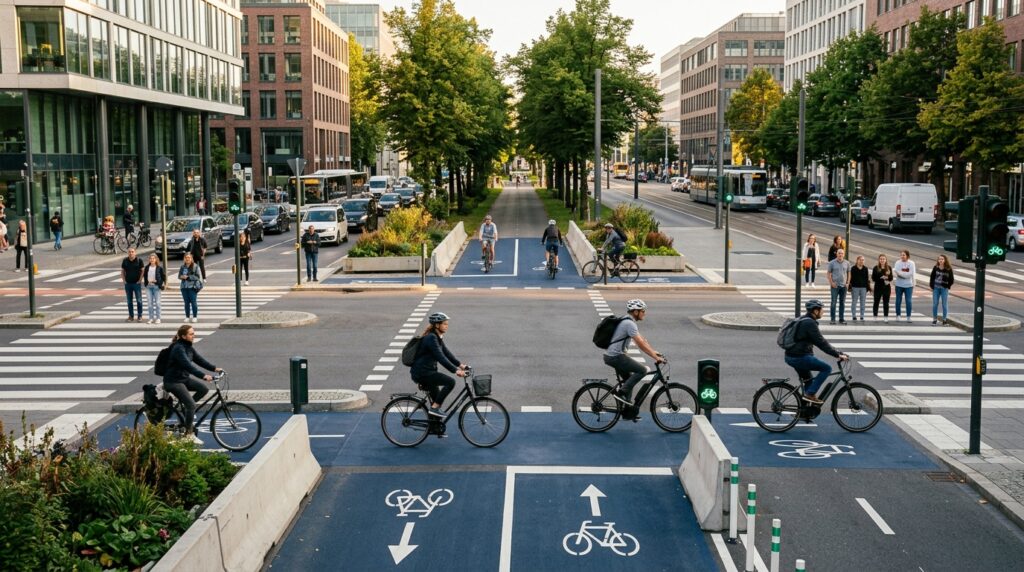
Bike infrastructure is usually discussed in terms of protected lanes, intersections, traffic separation, and pavement. Those things remain essential. Our recent article on why cities are building wider protected bike lanes explains how width and separation can make cycling networks work for a broader range of users.
Heat introduces another layer: the environment around the lane itself.
A study released in August 2026 examined roughly 2.3 million docked bike-share trips in Chicago and found that extreme heat reduced departures, but the effect was substantially smaller around stations with more surrounding greenery. The estimated heat-related decline narrowed from about 3.8% in low-greenness locations to around 0.2% in areas with high levels of greenery.
That does not mean planting one tree instantly creates a heat-proof bike lane. It does suggest that trees, vegetation, and shade can be meaningful parts of climate-resilient transportation planning rather than decorative extras.
The coolest route may be better than the shortest route
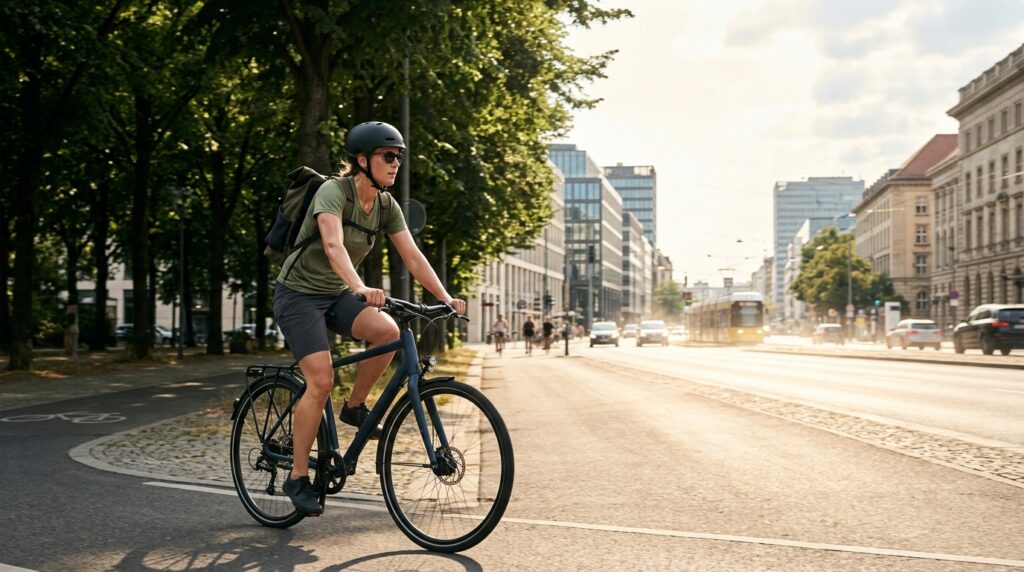
Commuters already understand this intuitively. A tree-lined residential street can feel dramatically different from a six-lane commercial corridor surrounded by parking lots. A river trail may be slightly longer but more comfortable during the afternoon. A route passing parks and shaded blocks can provide small periods of relief that make the entire trip feel manageable.
This creates a different way to think about route quality. Navigation apps traditionally prioritize time and distance. A heat-resilient cycling route might also consider shade, tree canopy, pavement exposure, access to water, traffic stress, and places where a rider can stop if necessary.
City design therefore influences more than safety. It influences whether cycling remains attractive under changing environmental conditions. Our City Stories section explores this relationship between streets, neighborhoods, infrastructure, and the people moving through them.
How to Build a More Heat-Resilient Bike Commute
Commuters cannot control the weather, but they can create routines that make difficult conditions easier to manage. The key is to stop treating every day as though the same route, pace, clothing, and departure time will always be appropriate.
A resilient commute has alternatives. There might be a shaded route for hot afternoons, a protected direct route for normal conditions, and a bike-plus-transit option for days when riding the entire distance is not sensible.
Plan the Ride Around Conditions, Not Just Distance
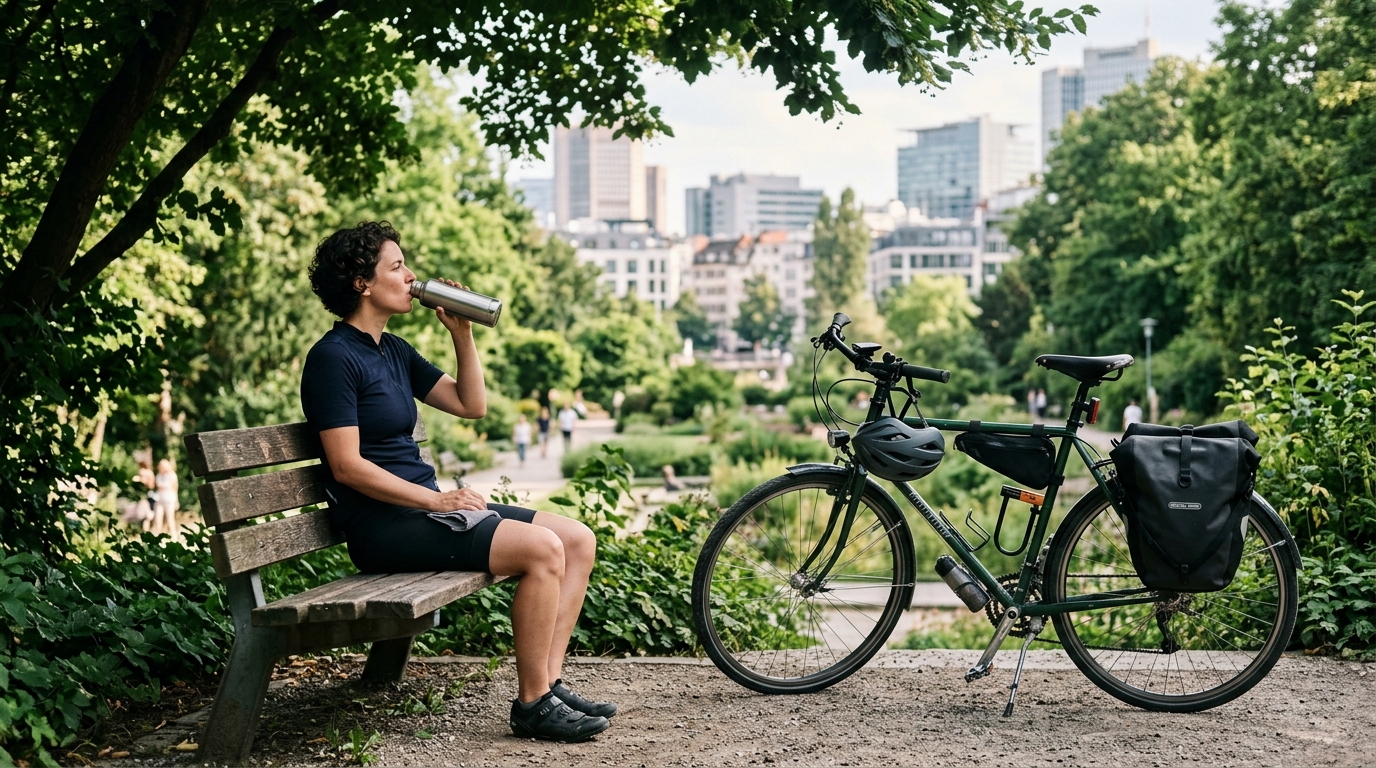
Start with the forecast before leaving home. Temperature alone does not tell the entire story, so look at heat advisories, humidity, precipitation, wind, and air quality where relevant. If conditions are expected to become significantly worse later, consider how that affects the return trip rather than evaluating only the morning ride.
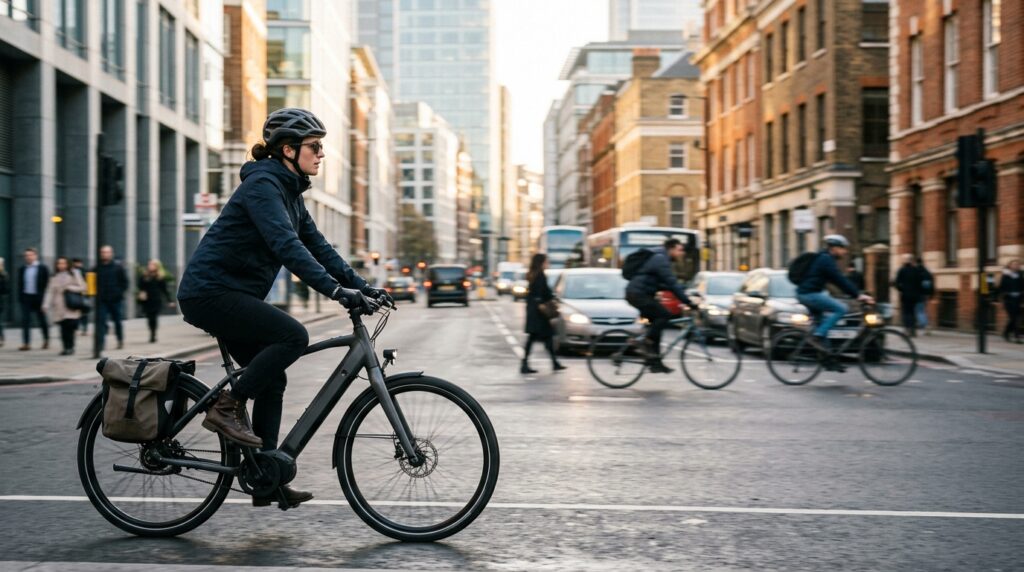
Carry enough water for the expected conditions or know where it can be refilled. Lightweight, breathable clothing can make a difference, while a rear rack or pannier keeps bags off the rider’s back and can reduce an unnecessary source of heat. Fenders become useful when summer heat turns into sudden rain.
Maintenance also matters. Properly inflated tires, functioning brakes, reliable lights, and a drivetrain that operates smoothly reduce unnecessary effort. A poorly maintained bicycle is irritating on a normal day and considerably less enjoyable when the rider is already dealing with extreme conditions.
Treat HeatRisk and air quality like traffic conditions
A commuter would not intentionally ride into a closed street simply because it was part of the usual route. Heat alerts and poor air quality deserve a similar mindset. Conditions are information that should influence the plan.
The CDC advises people exercising outdoors on hot days to drink more water than usual, avoid waiting until they feel thirsty, reduce activity during the hottest part of the day when possible, and stop activity and move to a cool place if they begin feeling faint or weak. Riders should know the signs that their body is struggling and avoid treating discomfort as a challenge that simply has to be pushed through.
More everyday preparation can be found in our Commuter Guides, where route planning, equipment, weather riding, visibility, storage, and practical daily cycling belong alongside each other.
There is also a larger cultural shift happening. The traditional image of a committed bicycle commuter is someone willing to ride through anything. That may make a good story, but it is not the best standard for a transportation system. Successful urban cycling should not depend on toughness.
bicycles
If cities want bicycles to function as everyday transportation, the network has to work for ordinary people dealing with ordinary constraints: work schedules, children, groceries, changing weather, physical comfort, and limited time. Shade trees, protected lanes, reliable transit connections, secure parking, drinking-water access, and well-maintained streets can all contribute to making cycling more dependable.
Our Riders stories focus on the people experiencing these streets firsthand, while Cycling Culture examines how riding fits into the broader rhythm of urban life. Weather belongs in that conversation because every rider experiences the city through its climate as much as through its architecture.
Extreme heat will not mean the end of the bicycle commute. The latest research suggests something more interesting: cycling behavior adapts. Riders change timing, routes, and travel choices. Some locations remain more resilient than others. Greenery can soften the effect of heat, while comfortable weather can dramatically increase the appeal of riding.
The next stage of urban cycling should therefore be about resilience as much as expansion. Cities need networks that remain useful beyond the perfect spring afternoon, and riders need routines flexible enough to respond when conditions change.
The best commute in 2026 may not always be the shortest or fastest one. On a hot day, it might be the route beneath the trees, beside the water, through the protected lane, or toward the train that handles the final miles. That is not giving up on cycling. It is learning to use the city more intelligently.