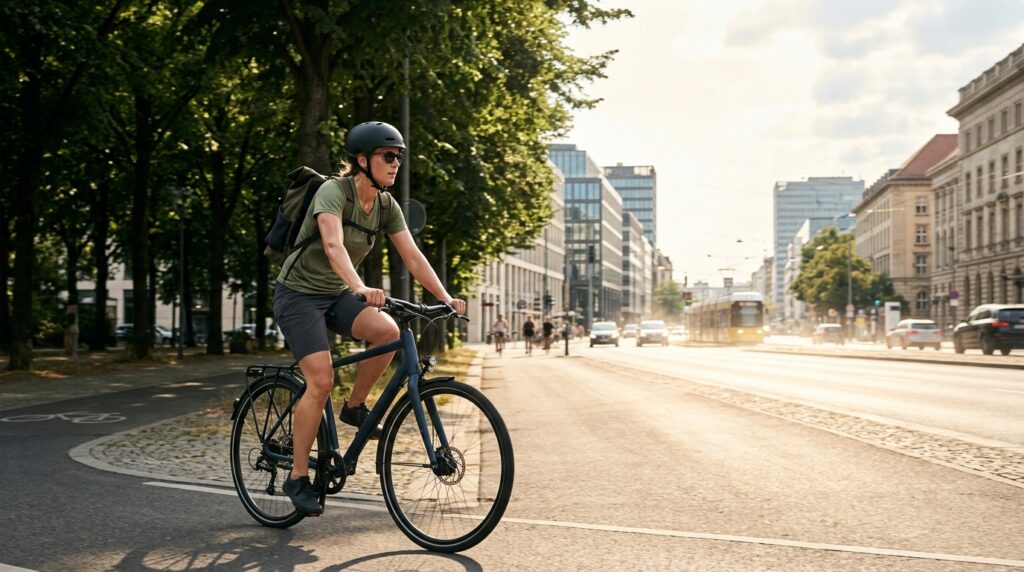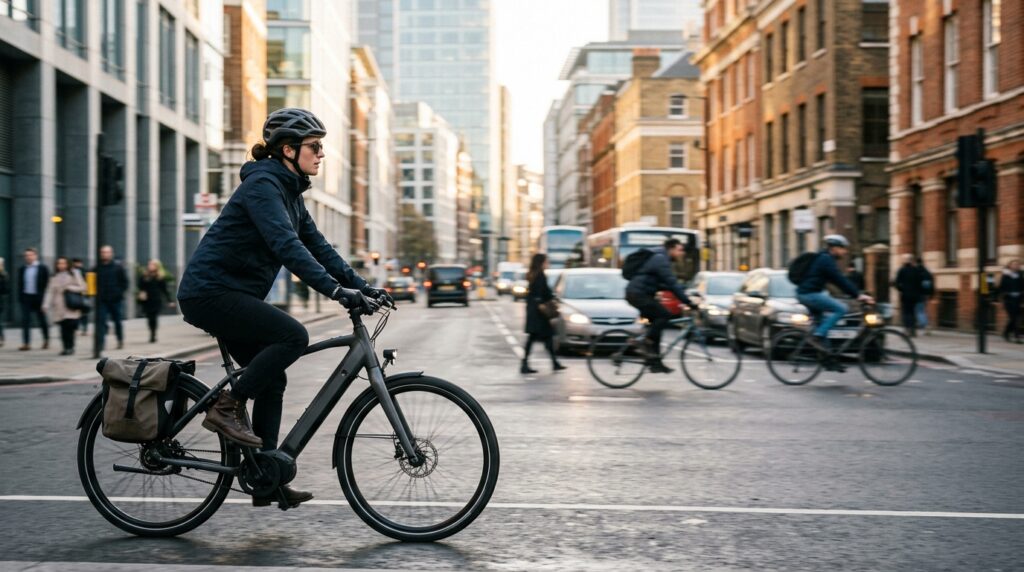
Electric bikes have moved from curiosity to everyday transportation. In cities around the world, commuters are using pedal-assist bikes to replace short car trips, bridge the gap between home and public transport, carry work gear, and make longer routes feel practical before the workday even begins. That growth is changing the visual rhythm of city streets. Traditional bicycles, shared bikes, cargo bikes, delivery e-bikes, and faster electric models now compete for limited street space.
For commuters, the appeal is obvious. An e-bike can flatten hills, reduce the effort of a long ride, and make a 30- or 40-minute cycling commute realistic for people who would not choose a conventional bicycle every day. But convenience also brings new questions about speed, etiquette, batteries, parking, charging, and the type of infrastructure cities need. The e-bike boom is best understood as an expansion of who can participate in everyday urban riding.
Why E-Bikes Have Become the Defining Urban Commuter Story
The modern commute is rarely simple. A rider may need to cross several neighborhoods, connect with a train, carry a laptop, climb a steep grade, or arrive at work without feeling exhausted. That is exactly where electric assistance changes the equation. A modest motor does not remove the bicycle from the experience; it reduces the barriers that prevent people from choosing a bike in the first place.
Speed, Distance and Effort Are Changing the Daily Ride
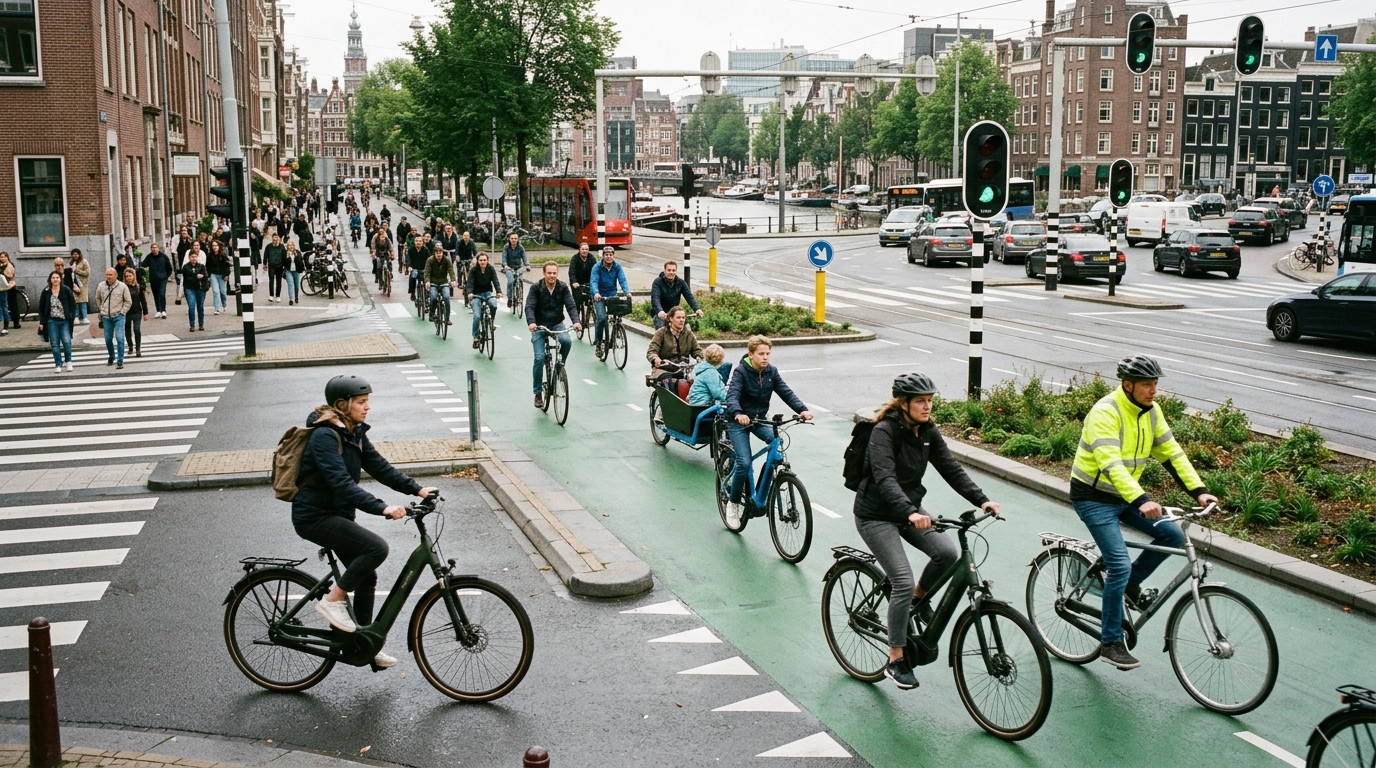
For years, cycling advocacy focused on convincing more people to ride. E-bikes approach the same problem from another direction: they make riding easier to fit into real schedules. A commuter who previously considered five miles too far may view the same trip differently with pedal assistance. Parents can carry children or groceries. Older riders can stay mobile. Workers can cover longer routes without needing a shower at every destination. Riders dealing with headwinds or steep terrain can maintain a steadier pace instead of arriving worn out.
E-bikes are changing who can realistically commute by bicycle
This broader accessibility is one reason e-bikes are becoming such an important part of urban mobility. They reduce the fitness threshold associated with daily cycling and make consistency easier. Someone may still choose a conventional bicycle for weekend riding while using an e-bike for work, errands, or time-sensitive trips. That flexibility matters because commuting is less about sporting performance and more about reliability.
It also changes the idea of what a “cyclist” looks like. Office workers, parents, service workers, and designers carrying equipment are all part of the same street ecosystem. Our Riders section explores the people behind those everyday journeys, while the Cycling Culture section looks at how bicycles become part of urban identity rather than simply exercise equipment.
More riders also means more pressure on city streets
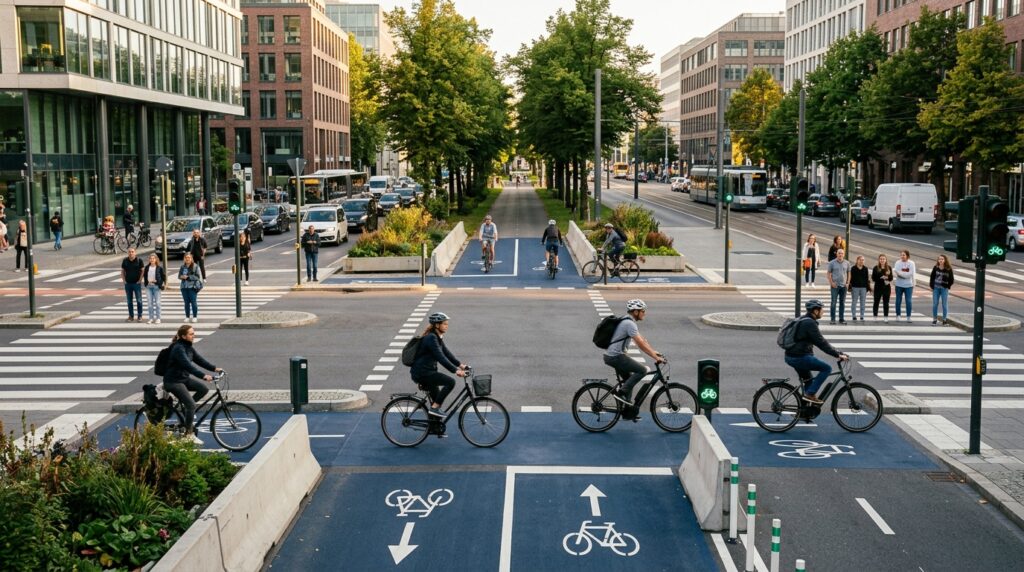
The challenge is that many streets were not designed for a mix of traditional bikes, e-bikes, scooters, cars, pedestrians, buses, and delivery vehicles moving at different speeds. As electric bikes become more common, cities have to think beyond painting a narrow line along the edge of a busy road. Width, intersection design, visibility, passing space, parking, loading zones, and separation from pedestrians all become more important.
Riders have responsibilities too. Electric assistance can make it easy to approach an intersection faster than drivers or pedestrians expect. A safe commuter learns to manage that speed, slow down around people walking, signal early, avoid squeezing through unpredictable gaps, and assume that other road users may misjudge how quickly an e-bike is approaching. Electric assistance changes acceleration, but judgment still determines whether a ride feels controlled.
Battery Safety Has Become Part of Commuter Literacy
The biggest difference between a conventional bicycle and an e-bike is not the motor alone. It is the electrical system: battery, charger, wiring, controls, and the way those components work together. That makes purchasing and charging decisions part of basic bicycle safety. A cheap replacement battery or incompatible charger can create a risk that has nothing to do with road riding.
Battery certification matters more than most buyers realize
One useful benchmark is UL 2849, a safety standard that evaluates the electrical system of an e-bike, including the drivetrain, battery system, and charger combination. UL Solutions explains that the standard is designed to address electrical and fire hazards across the complete system rather than treating the battery as an isolated component. Riders researching a new e-bike should therefore look beyond range, motor power, and price and ask whether the electrical system has been evaluated by a recognized testing organization. You can read the UL Solutions overview of UL 2849 e-bike certification for more detail.
Certification is not a substitute for good ownership habits, but it gives commuters a useful safety signal. The same principle applies when replacing a charger or battery. Matching the components approved for the bicycle is generally safer than improvising with an inexpensive aftermarket part simply because the connector fits.
Responsible charging is part of everyday commuting
Charging should be treated like any other routine involving high-energy equipment. Use the charger intended for the bike, inspect the battery for visible damage, keep the charging area clear, and avoid blocking hallways or exits. If a battery begins overheating, swelling, leaking, producing unusual smells, or making unexpected noises, stop using it and have the system inspected by a qualified service provider.
Commuters should also think about where the bike will spend eight hours while they are at work. Secure parking protects against theft, while a designated charging area can reduce improvised extension-cord setups around desks or stairwells. Employers that want to encourage cycling can make a surprisingly large difference by providing secure racks, sensible charging policies, lockers, and changing facilities. Our Commuter Guides will continue covering practical topics such as bike storage, daily setup, weather preparation, and carrying work equipment.
How to Make E-Bike Commuting Work Better in Real Cities
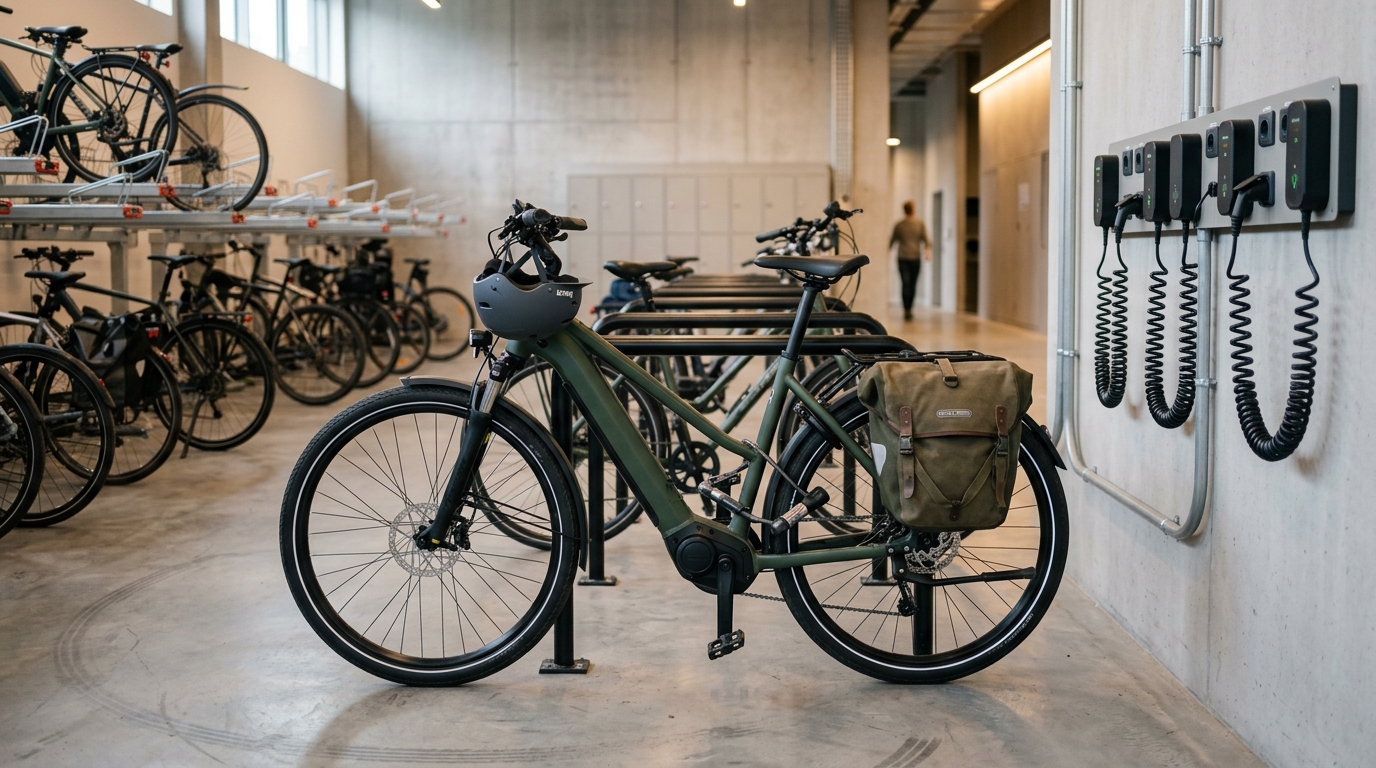
The best e-bike commute is not necessarily the fastest route shown by a navigation app. It is the route that feels predictable enough to repeat five days a week. A quieter parallel street with fewer conflicts may be better than a direct arterial road. A protected lane may justify an extra few minutes. A route with reliable bike parking at the end can be more useful than one that leaves the rider searching for a safe place to lock up.
Build a Safer Daily Routine From Street to Storage
Start by learning how your bike behaves before mixing with rush-hour traffic. Practice braking from different speeds, accelerating from a stop, making shoulder checks, signaling with one hand, and controlling the bike at low speed. E-bikes are often heavier than standard bicycles, so stopping distance and balance can feel different, especially when the bike is loaded with bags or cargo.
Next, build the commute around visibility and predictability. Use front and rear lights when conditions call for them, position yourself where drivers can see you, and avoid sudden lane changes. Give pedestrians extra space. Slow before blind corners. Treat shared paths as shared spaces rather than high-speed corridors. When passing another rider, make the move deliberate instead of forcing a narrow gap.
Route planning deserves the same attention as equipment. Look for connected bike lanes, lower-speed streets, safer intersections, and public-transport links that give you a backup option. Our City Stories section is built around the idea that every city has its own cycling logic: the streets that feel calm, the corridors that connect well, the gaps that create stress, and the neighborhoods that are easiest to experience from the saddle.
commuting equipment
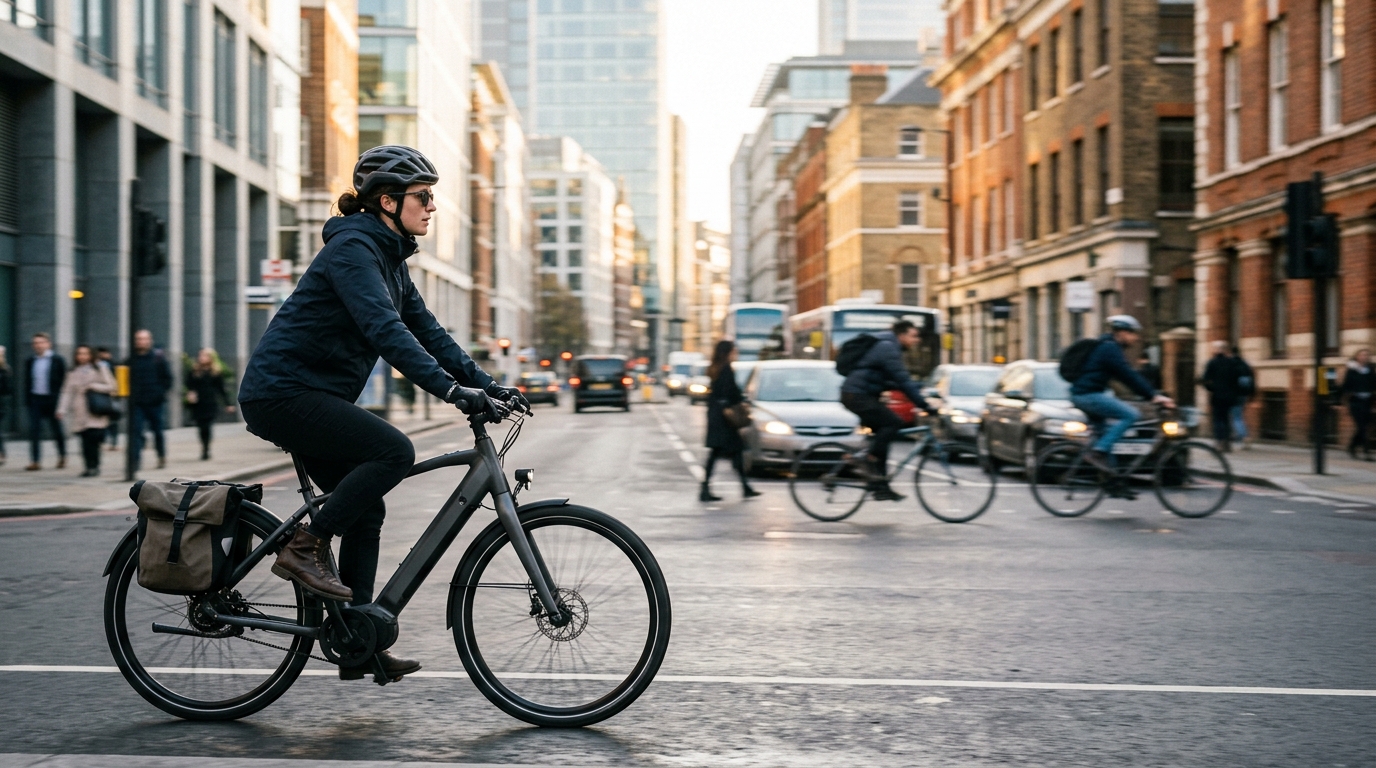
Finally, remember that commuting equipment should solve your actual problems. A larger battery is useful only if you need the range. A powerful motor is not automatically better in a dense city. Fenders may matter more than performance components in wet weather. A sturdy rear rack can be more valuable than an aerodynamic accessory if you carry a laptop and groceries. Good commuter design is usually quiet, practical, and repeatable.
The rise of e-bikes is forcing cities and riders to rethink what everyday cycling can be. That is ultimately a positive challenge. More people can now consider a bicycle for trips that once seemed too long, too hilly, or too demanding. At the same time, faster and heavier bikes make thoughtful infrastructure, responsible riding, safe batteries, and better parking more important than ever.
The future of the urban commute will be a mix of walking, public transport, conventional bicycles, e-bikes, and other forms of low-impact mobility. The cities that handle that mix well will be the ones that make movement feel connected rather than competitive. For riders, the goal is simpler: choose equipment you trust, learn the streets you use every day, ride at a speed that fits the space around you, and make the bicycle an easier part of ordinary life.